
Let’s be honest—optimizing a website for international audiences is way trickier than just adding a few translated pages. You can’t just slap Google Translate on your site and call it a day. International SEO is like juggling multiple balls at once—language, culture, region, search engines, and user behavior all matter. Get one thing wrong, and your global traffic could tank faster than you expected.
Here’s the deal: international SEO isn’t just about translating content. It’s about making sure your website makes sense to users and search engines across different countries. And trust me, search engines are picky—they want clarity. They need to know which version of your page to show to which audience.
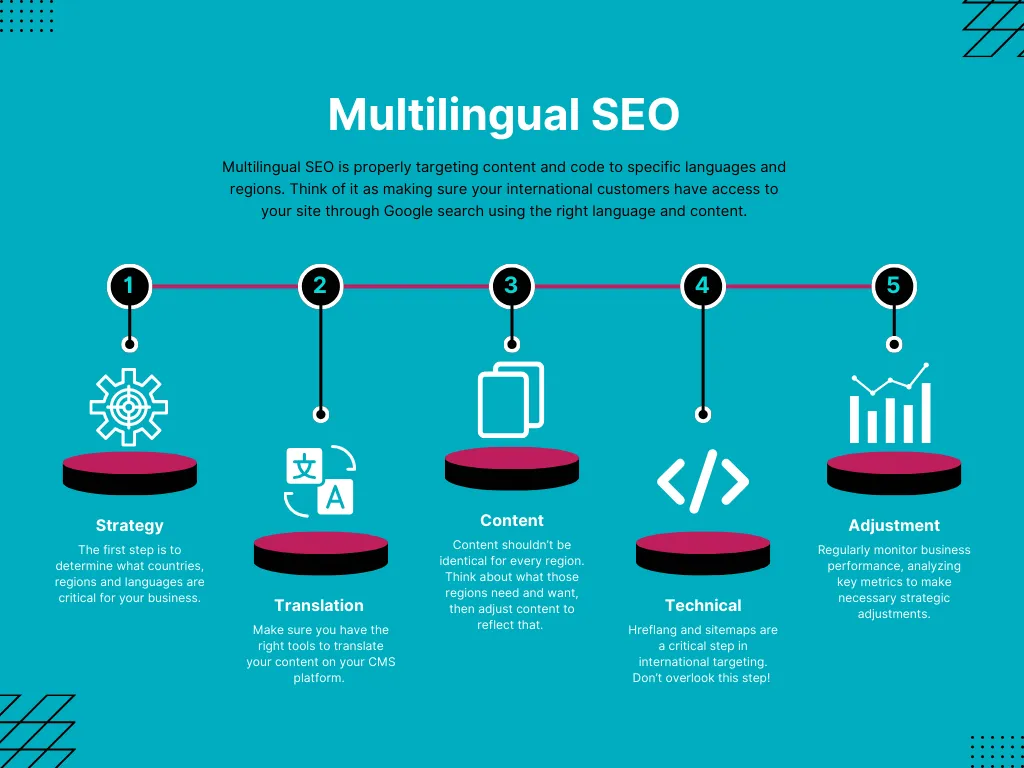
Understand Your Target Markets
This seems obvious, but people often skip it. You need to research your audience like a detective on a case. What languages do they speak? What local slang or terms do they use? Are there cultural differences that affect how they search for your product or service?
Here’s something to think about: a search term that’s popular in the US might be completely irrelevant in Germany. Even worse, a direct translation could sound weird—or worse, offensive. Localization is more than translation. It’s tailoring your content so it resonates with the local audience.
Choose the Right URL Structure
There are three main ways to handle international URLs:
- Country code top-level domains (ccTLDs) – like de for Germany or example.fr for France. This is great for geo-targeting because it tells search engines exactly which country your content is for. But it’s harder to manage multiple domains.
- Subdomains – like example.com. Easier to manage than separate domains, but Google treats them as somewhat separate sites, so authority doesn’t always carry over.
- Subdirectories – like com/de/. Easier for site authority consolidation and maintenance, but geo-targeting is slightly weaker than ccTLDs.
Personally? If you’ve got the resources, ccTLDs are solid. If not, subdirectories or subdomains do the job—just make sure you stay consistent.
Implement Hreflang Tags Correctly
Ah, hreflang—the little tag that makes a big difference. It tells search engines which language and region your page is for. Done right, it prevents duplicate content issues. Done wrong… and Google could show the wrong page to the wrong audience.
Example: You have English pages for the US (en-us) and the UK (en-gb). Without hreflang, Google might show your US page to a UK user—and that’s awkward.
Pro tip: Make sure every page references itself in hreflang too. It’s like saying, “Yep, this is me, in my own language.”
Localize Content, Not Just Translate
Here’s the tricky part—your content needs to feel local. Don’t just translate keywords; research the local search habits. For instance, people in France might search for “chaussures de course” instead of “running shoes.” In Brazil, it could be “tênis para corrida.” Small difference, big impact.
Also, think beyond keywords. Date formats, currencies, measurement units, even humor—it all matters. Users want to feel like your site was built just for them.
Optimize for Local Search Engines
Google isn’t everywhere. In Russia, it’s Yandex. In China, Baidu dominates. If you’re targeting those regions, you need to adapt your SEO strategy accordingly. That includes technical stuff (like robots.txt rules), meta tags, and even backlink strategies.
Here’s a little reality check: what works on Google might flop on Baidu. It’s a different ecosystem with its own rules. Don’t ignore it if you want serious global traffic.
Build Local Backlinks
Link building isn’t just for your home country. For international SEO, local backlinks carry weight. A backlink from a respected site in Germany is more valuable for your German pages than a US link.
Pro tip: guest blogging, local partnerships, and PR campaigns in your target country work wonders. Plus, it helps your brand feel local—not just some random foreign site trying to sell stuff.
Monitor Performance and Iterate
International SEO isn’t set-and-forget. You need to constantly monitor performance across regions. Check traffic, rankings, conversions, and user behavior by country. If something isn’t working, tweak it.
Here’s the thing: don’t expect overnight success. Global SEO takes time. Think of it like gardening—you plant seeds, water them, and sometimes adjust sunlight. Eventually, if you’re patient and strategic, you’ll see growth.
Final Thoughts
International SEO is part strategy, part research, and part patience. It’s like a see-saw—you need balance across languages, regions, and technical execution. Ignore any piece, and the whole effort can wobble.
Let’s be honest—handling global SEO can feel overwhelming at first. But with the right URL structure, proper hreflang implementation, local content, and targeted link-building, you’ll be well on your way. Remember, it’s not just about reaching new countries—it’s about connecting meaningfully with users around the world.
So start small, plan smart, and don’t be afraid to make mistakes. Global search isn’t a sprint—it’s a marathon, and every step counts.